Build clearer workflows, usable SOPs and visible accountability—so your practice can operate more consistently without every routine issue returning to the owner.
Dental361 helps private and independent dental practices identify operational gaps, simplify recurring work and turn agreed improvements into practical systems the team can follow.
Although this service focuses on systems and daily execution, Dental361 also considers how operational constraints affect profitability, capacity, patient experience and the wider performance of the practice.

A full appointment book and a committed team do not always create a well-run practice. As the business grows, processes that once worked informally can become harder to coordinate.
These patterns do not necessarily indicate a lack of effort. They usually mean the operating structure has not kept pace with the practice.
Scheduling, recalls, patient follow-up or internal communication changes depending on who is working.
Decisions that should be supported by a clear process still require the owner’s attention or approval.
Information moves between clinicians, the front desk and management without a reliable sequence or clear ownership.
People may generally know their roles, but recurring tasks do not always have one clear owner or review point.
Documents may be available, but they are difficult to train from, rarely reviewed or disconnected from daily work.
Strong dental practice systems connect the process, the person responsible, the measure that shows whether it is working and the rhythm for reviewing it.
The team can see the essential steps, hand-offs and exceptions involved in recurring work.
Each important process has someone responsible for execution, follow-through and escalation.
Focused operational KPIs make performance visible without creating reports that nobody uses.
The team addresses recurring friction and updates the system as the practice changes.
SOPs are one part of this structure, but documentation alone does not change performance. A useful system must be clear enough to teach, practical enough to use and reviewed often enough to remain relevant.
Read how Dental361 approaches System Optimisation Procedures.
The scope depends on the practice and the problem being investigated. The aim is to find the operational gaps creating the greatest friction and address them in a practical order—not to add unnecessary process.
Examine how patients, tasks and information move through the practice to identify delays, unclear transfers and repeated workarounds.
Select frequent, important or high-consequence processes where inconsistency creates risk, rework or reliance on one person.
Clarify who owns critical processes, where responsibility transfers and how incomplete actions or exceptions should be escalated.
Review the operating rules behind the diary, recalls, reactivation, follow-up and capacity. Explore Access.
Choose relevant operational indicators and connect them to a useful rhythm for decisions and follow-through. Explore Analytics.
Translate improvements into clear expectations, usable tools and practical reinforcement. Explore Alignment.
The exact outputs depend on the issue, available information and agreed scope. The first consultation is used to understand the concern, establish fit and determine what should be reviewed next.
The process begins with the practice’s real concern and builds only as far as the evidence and agreed scope require.
You do not need a complete SOP library or perfect data before beginning. The first consultation determines what information is useful and what level of review is appropriate.
Discuss the pressure inside the practice, the result the owner wants and whether Dental361 is an appropriate fit.
Examine the relevant workflows, existing procedures, responsibilities and available performance information.
Separate visible symptoms from the process, ownership, communication or review gaps causing them.
Choose improvements according to relevance, frequency, risk and the practice’s capacity to implement change.
Define practical actions, assign ownership and establish a rhythm for reviewing and refining the system.
Better systems should make everyday execution clearer and more reliable while preserving professional judgement.
Patients, information and tasks move through the practice with clearer steps and fewer avoidable hand-off gaps.
Scheduling, follow-up and team effort are supported by operating rules rather than individual habits alone.
Owners and managers can see who is responsible, what needs attention and whether agreed actions are progressing.
The team can handle recurring situations within defined boundaries while important exceptions still reach the right person.
Good systems do not replace judgement. They clarify where the team can act independently and where clinical, management or owner input is genuinely required.
Operational problems rarely exist in isolation. The Dental361 A6 Model helps examine connected constraints without losing focus on the primary operational issue.
Use focused KPIs and a practical operating rhythm to identify gaps, support decisions and make follow-through visible.
Align marketing activity with practice capacity, preferred patient demand and operational priorities.
Improve scheduling, recalls, reactivation and capacity rules so patients can access care more reliably.
Strengthen the patient journey, treatment communication and follow-up that support informed decisions.
Clarify roles, hand-offs, expectations and training so execution does not depend on repeated reminders.
Improve chairside flow, day design and implementation discipline so agreed changes become repeatable habits.
Systems and operations consulting remains focused on workflows, SOPs, accountability and execution. The complete A6 Model ensures that connected constraints elsewhere in the practice are recognised rather than treated in isolation.
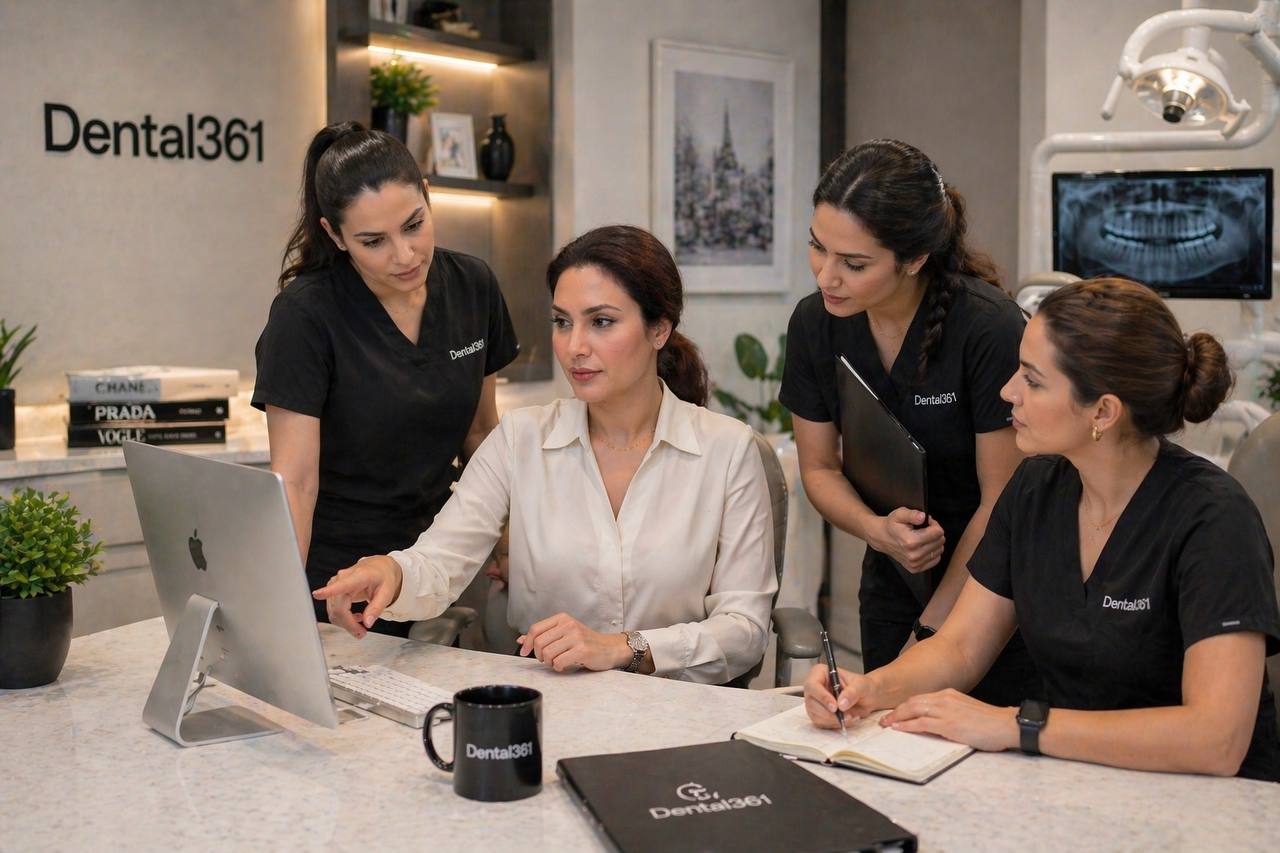
Dental practice systems need to work within the realities of patient care, clinical time, team communication and owner responsibility. Generic process advice is rarely enough if it ignores how a dental practice actually operates.
Behnoosh Basafa holds a Doctor of Dental Surgery and a Master of Public Health from the University of Melbourne. Her background includes clinical dentistry, practice ownership and advisory work with dental clinics.
This supports a practical approach: understand how the practice currently works, identify the system behind the recurring problem and translate findings into changes the owner and team can implement.
Dental361 is connected with the professional ecosystem of Dental Brokers Australia, while maintaining a defined role: helping private-practice owners improve the systems and operating disciplines that influence day-to-day performance.
Dental361 is based in Melbourne and supports private and independent dental practices across metropolitan Melbourne and regional Victoria. In-person work may be available where practical, with remote review, planning and implementation support for practices elsewhere in Australia.
A single-site, owner-led clinic may need clearer hand-offs and essential SOP foundations. A growing or multi-chair practice may require stronger accountability, management visibility and review rhythms.
Operational problems are often connected to wider business pressures. Dental361 considers the broader practice while keeping the agreed work focused on the owner’s primary concern.
If several issues are connected—or the main constraint is not yet clear—Dental361 can review the practice more broadly and identify where attention is most likely to create meaningful improvement.
If the primary concern involves margin, cash flow, overheads, EBITDA, capacity utilisation or business value, the practice may benefit from a more commercially focused review.
This service remains specifically focused on workflows, SOPs, accountability, patient flow and consistent operational execution. The initial consultation helps determine whether the practice needs a focused operational review or a broader examination of connected business issues.
Dental practice operations consulting examines how recurring work is organised and completed across the practice. It can include workflow mapping, SOP priorities, scheduling and recall systems, role clarity, hand-offs, KPI visibility and management review rhythms.
No. Dental361 does not take over the daily role of a practice manager. The service helps owners and managers analyse and improve the systems used to run the practice, with clearer processes, responsibilities, measures and priorities.
Yes, where SOP development is relevant to the agreed scope. The first step is identifying which processes genuinely need documentation. Priority is normally given to activities where inconsistency creates risk, delays, rework or excessive owner dependency.
There is no universal first SOP. A suitable starting point is usually a frequent or important process that is currently inconsistent, unclear or dependent on one person. This could involve appointment handling, recalls, treatment follow-up, hand-offs, onboarding or performance reviews.
That depends on the issue. Owners and managers can provide the initial context, but understanding or improving a workflow may require input from the people who perform it. Team involvement should be purposeful and limited to what is needed.
No. Existing documents and data can be useful, but they are not prerequisites. The initial consultation establishes what already exists and what information is relevant to the review.
They should not. Not every activity needs an SOP, KPI or meeting. Structure should be added only where inconsistency, risk, rework or owner dependency justifies it.
Yes. Dental361 is based in Melbourne, supports practices across Victoria and provides remote consulting to private dental practices elsewhere in Australia.
If the same operational problems keep returning, the cause may sit within the workflow, the hand-off, the ownership or the way performance is reviewed.
Use the free consultation to discuss the current pressure, determine whether Dental361 is the right fit and identify the most useful next step.